The Standing Appointment
Ask anyone who works behind a salon chair which clients they know best, and the answer is never the ones who come most often. It is the ones who come at the same time. Thursday at nine. The first slot after lunch on the second Saturday. A booking that has not moved in years becomes a small fixed star, and the week arranges itself around it.
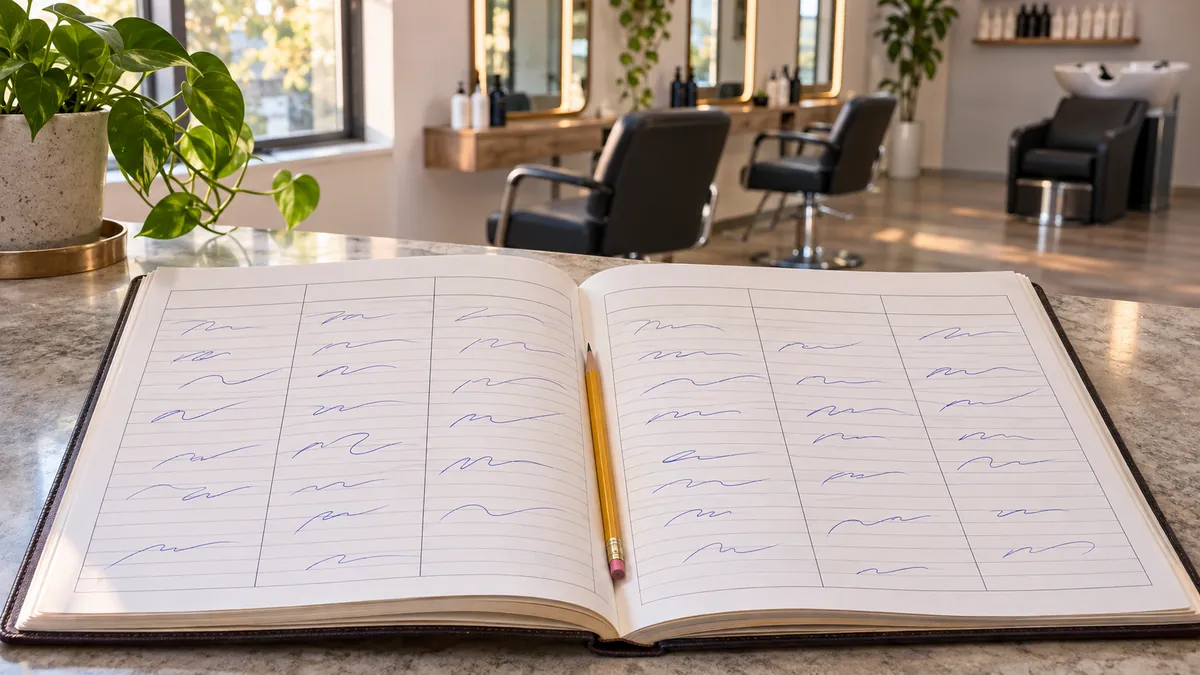
An hour that does not drift
Most of the calendar of a grown adult is negotiable. Errands slide to tomorrow, calls wait for a better moment, and the days start to look alike. Plenty of people notice, somewhere in their fifties, that whole weeks can blur in the memory precisely because nothing in them was fixed. Monday could have been Wednesday.
A standing appointment is the opposite of that blur. It is booked once and then simply kept. Because it repeats, it gives the rest of the week a reference point: the dentist was the day after the chair, the letter came two days before it. Researchers who study how people recall ordinary events have long looked at landmarks like these, the dated, distinct moments that the rest of a period gets hung on. A weekly booking is a landmark you build on purpose.
None of this needs a salon. A standing lunch with a brother, a regular hour at the library, the same pew every Sunday, a fixed slot at the barber or the tailor: the setting matters less than the rule that it does not move. What we see from our side of the chair is simply how strongly the regulars lean on theirs.
A face that remembers you
The second thing a standing appointment brings is a person on the other end who expects you. That person remembers that your granddaughter started college in August and asks how the first exams went. You, in turn, remember that she was worried about her mother's move. Each visit opens a thread that was tied off seven days ago.
That little exercise, picking up a conversation exactly where it stopped, is one of the gentlest workouts for recall that daily life offers. There is no quiz and nobody keeps score. Yet to do it at all, you have to retrieve a name, a place, a worry and the order in which things were said. People who keep several of these threads going across a week often describe their heads as feeling more in use, and that is a reasonable way to put it.
Names deserve a word of their own, because they are the first thing many people say has started to slip. A trick the front desk uses every day travels well: say the name back once, out loud, in the first minute ("Good morning, Marguerite"), and attach it to one fact you just heard. Repeated at every visit, the pairing gets sturdier. It is not magic. It is just a loop run often enough to wear a groove.
Talking while the hands are busy
Something else happens in a chair that rarely happens across a desk. Two people talk while one of them is working with their hands, and neither has to fill a silence. Conversations here wander, pause and come back. Many people who find a face-to-face chat tiring say this side-by-side kind is easier, and it tends to run longer.
You can borrow the arrangement at home. Shell beans with a neighbor on the porch, fold laundry while a friend is on speakerphone, sand a chair in the garage with your son. Keep the hands moving and the talk loose. The point is not the task; it is giving the conversation somewhere to rest so that it keeps going.
Keeping the loop alive
Standing appointments fail quietly. One week gets skipped for a cold, then a holiday interrupts, and suddenly a habit of six years has a two-month hole in it. The regulars who keep theirs for decades share a few small practices worth copying.
They write the next booking down before they leave, in ink, on paper, in the same place every time. They regard it as fixed in the way a medical appointment is fixed, which means other plans bend around it rather than the reverse. When they must miss one, they rebook the same weekday, the next week, before hanging up the phone. And they bring something to say: a question saved up from the last visit, a photograph, a piece of news. A conversation that arrives prepared tends to go further than one that has to start from nothing.
Some people keep a tiny log of these visits at the back of a diary, a line or two each time: who was there, what came up, what to ask next week. Reading the last line just before walking in is a quick way to warm up the thread. Over a year those lines become a record of a life that did not blur.
When the routine itself starts to slip
A standing appointment is also a kind of quiet instrument. Because it is the same every week, a change in how it goes is easy to notice. Forgetting a booking you have kept for years, arriving on the wrong day more than once, or losing the thread of a conversation you used to carry easily are worth paying attention to, not with alarm, but honestly.
The useful response is to say so to someone. Mention it to the person who keeps the other side of the appointment, to a family member, and to a doctor at the next visit. Changes in memory and attention have many ordinary causes, from sleep and stress to medications and hearing, and a professional can look at those properly. A habit can support a sharp mind. It cannot examine one.
Bring this to your next checkup
If you are missing appointments you used to keep without effort, losing words or names more than you think is usual for you, or feeling confused about days and places, book a visit with your doctor and describe what you have noticed, with dates if you can. Bring a list of everything you take. This page is no substitute for sitting down with them, and no routine described here is meant to diagnose or manage any condition.